Home > Pruning shade trees
Pruning shade trees in landscapes
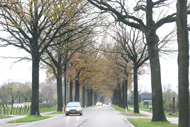 Great structure on street trees appropriately pruning Great structure on street trees appropriately pruning |
Pruning methods that promote a sound tree structure help trees resist failure, provide clearance, and improve aesthetics, while promoting long life. From training young trees to managing mature ones, structural pruning to guide and manage tree architecture should be the primary goal each time a tree is pruned. A well-structured tree is aesthetically pleasing, preserves the crown as it grows larger, and is long-lived. Poor tree architecture can be costly, leading to failure and early tree removal. When improperly
performed, pruning can harm the tree's health, stability, and appearance
and make matters worse.
Why prune? Cause no harm Objectives Design a plan At planting
Time of year Pruning cuts Structural pruning Thinning Reducing Raising Cleaning Restoration Pruning palms Mature trees Utility pruning Practice pruning Photos
NEW!! FDOT - Appendix A: Drafting Pruning Specifications (word doc/pdf)
Appropriate pruning reduces wind damage
(pdf) Young trees, Mature trees, Restoration, Landscape trees and shrubs, Crape myrtle pruning
(pdf) Prune at planting, Prune young trees, Pruning methods, Restoration prune
: Click here
See: Root pruning, Nursery pruning, Pruning specifications
See: Additional examples